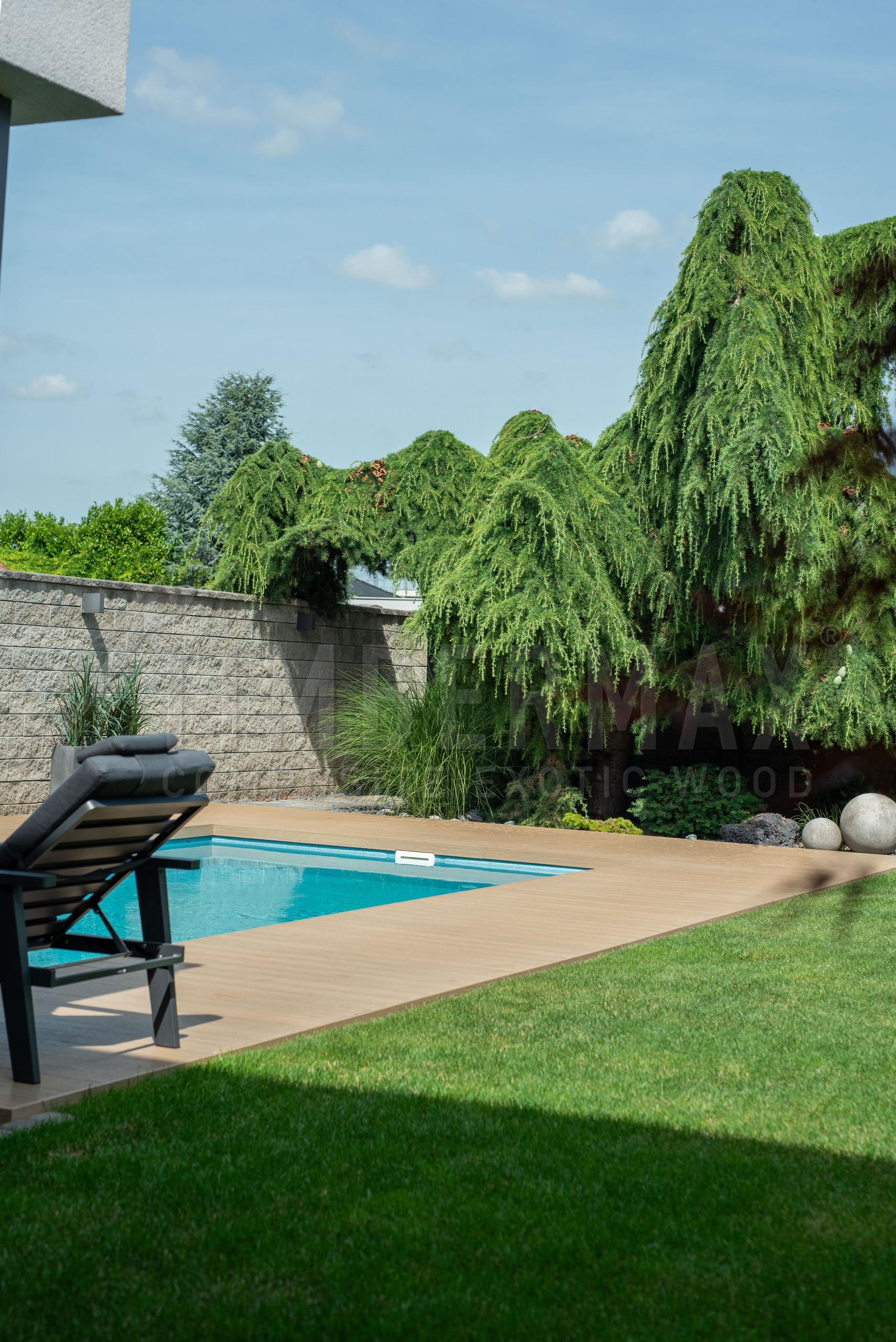
What must a pool surround cope with?
Assess the documented properties of the specific product rather than relying on a broad material label. Two tiles, two timber species or two composite boards can have very different surfaces, construction and exterior performance.
- Slip performance: consider the surface when wet and allow for regular cleaning.
- Surface temperature: darker finishes generally become hotter in direct sunlight than lighter colours.
- Drainage: water needs a clear route away and should not remain trapped beneath the finish or around the structure.
- Barefoot comfort: texture, edges, joints and the possibility of splinters or sharp points all matter.
- Technical access: inspection points and pool equipment must remain accessible after the surround is complete.
Porcelain paving
Exterior porcelain can create a precise, clean surface and is available in many formats and finishes. Around a pool, the selected product needs suitable exterior, frost and slip-performance specifications. A successful result also depends on the base, falls, joints and edge details being designed correctly.
Paving is usually firm and straightforward to clean, although some finishes can feel hard underfoot or become noticeably warm in sunlight. Replacing a damaged piece is easier when the same range and colour remain available.
Natural stone
Stone provides natural variation and can connect well with the architecture and landscape. Different stones vary significantly in absorption, texture, thermal behaviour and treatment requirements. The particular stone, surface finish and suitability for a pool environment therefore need to be assessed.
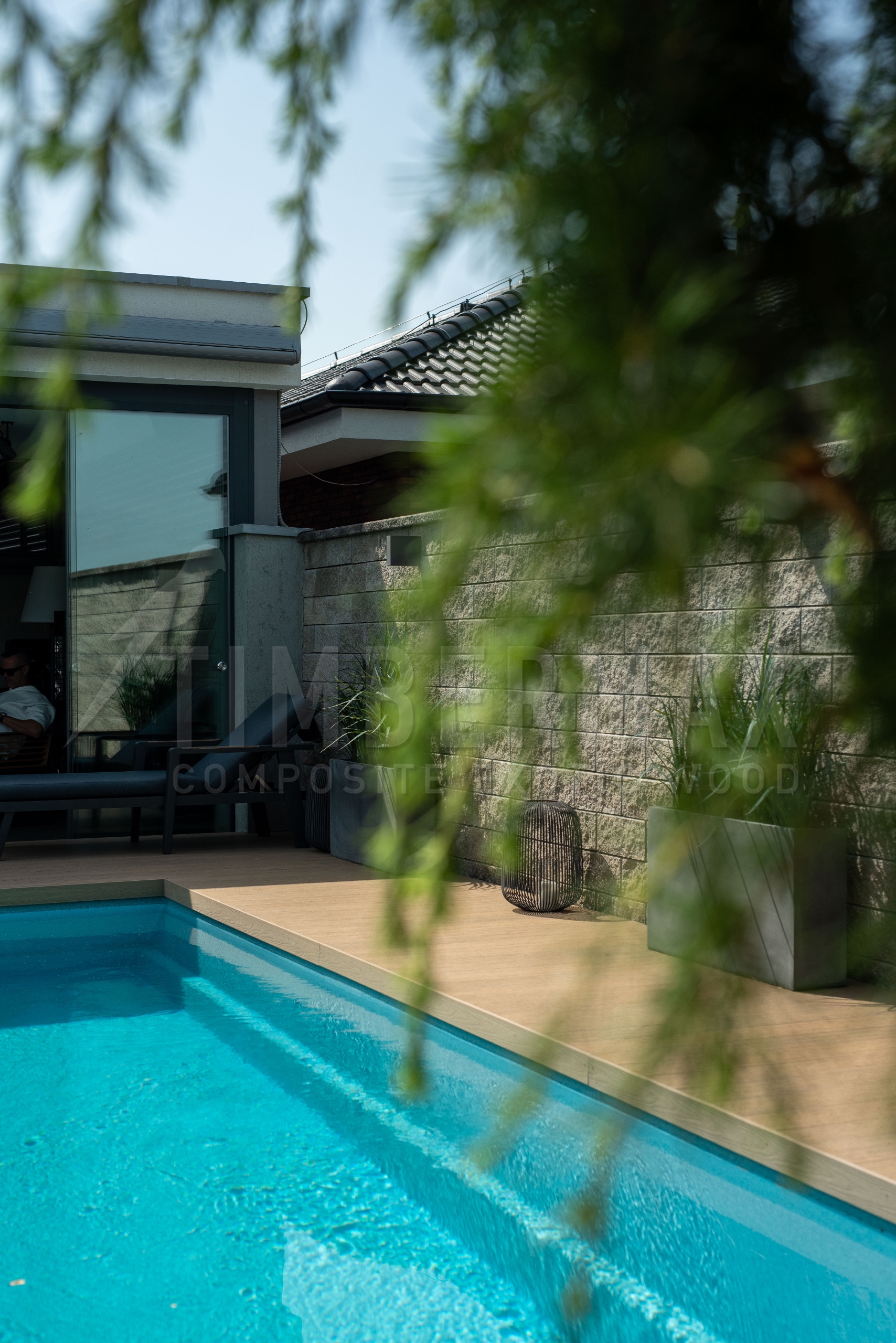
Timber decking beside a pool
Timber is a pleasant natural material and the right species can create a high-quality result. Species differ considerably in stability, surface characteristics, expected service life and maintenance. Sunlight and water naturally change timber colour; the boards can move and, depending on the timber, may develop cracks or splinters.
Keeping a particular appearance generally requires regular cleaning and, depending on the species, oiling or other treatment. A suitable substructure, ventilation and correct expansion gaps are also essential.
Composite decking around a pool
Composite boards are often selected where a wood look is desired without regular oiling or painting. WPC should not be chosen by colour alone. Profile construction, surface, barefoot suitability, slip performance, colour stability and warranty conditions should all be compared.
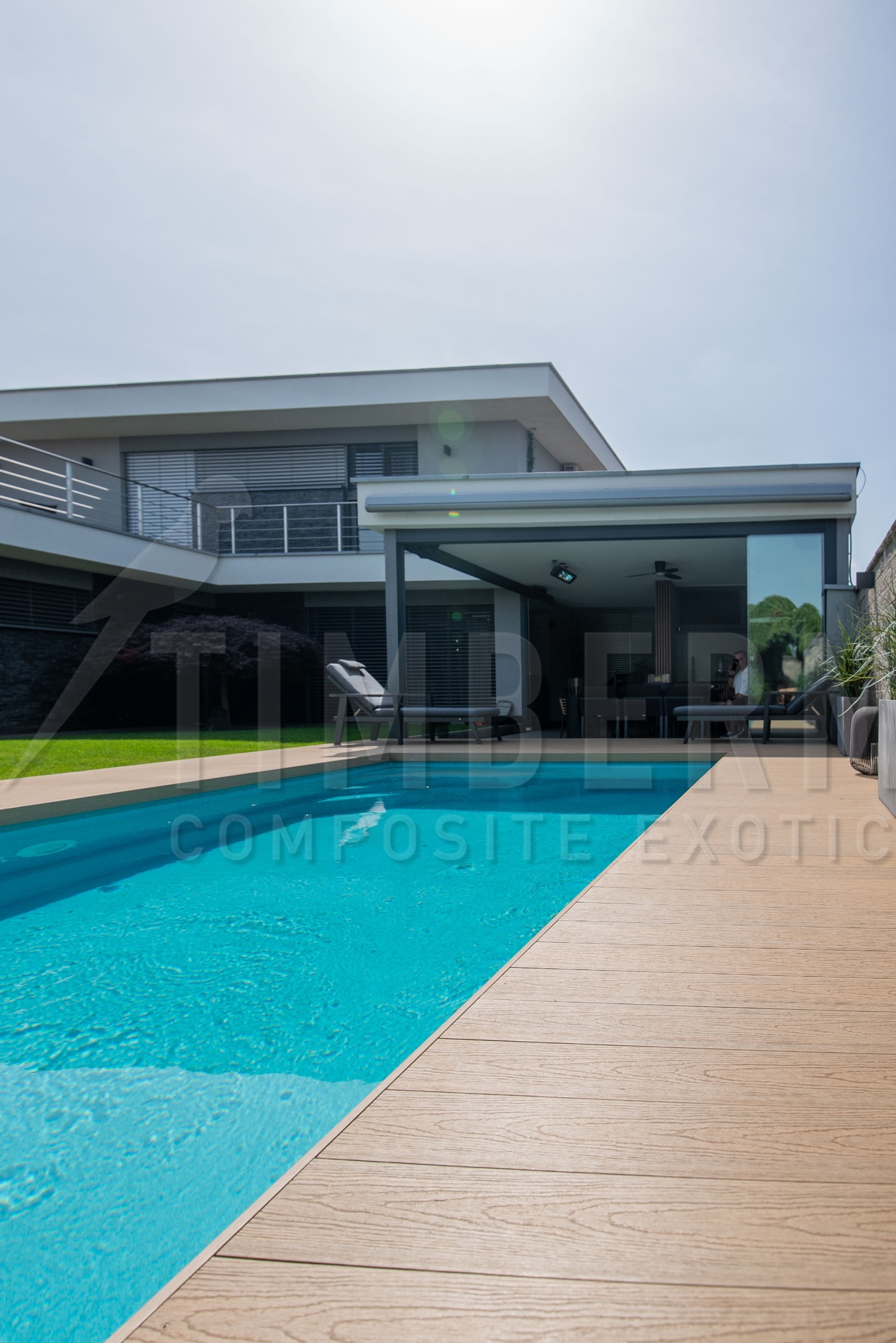
A composite pool surround needs to work as a complete system. Stability depends on the base, substructure, support spacing, fixings, expansion allowance and drainage. With a coordinated design, the same material can continue onto an adjoining terrace, steps or other exterior elements to form one architectural composition.
The pool-edge detail
The interface at the pool edge affects appearance, safety and future servicing. Finished height, board direction, connection to the pool coping, removable sections and access to equipment should be resolved before installation. With complex pool shapes, board direction and the way areas are divided can materially affect waste and the finished appearance.
How should you choose?
Before deciding, answer a few practical questions:
- Will the area be in direct sun for most of the day?
- How often will people walk on it barefoot?
- Is there a suitable concrete base, or is a separate structure required?
- Where will water drain and how will pool equipment remain accessible?
- Do you accept natural ageing, or prefer the most stable possible appearance?
- How much routine maintenance are you prepared to undertake?
Do not decide from one sample or a material-only price per square metre. Compare the complete build-up, technical properties, installation details and long-term care. For a composite solution, review the profiles and technical documents.
Different pool shapes, board directions and exterior connections can be seen in the Timbermax project gallery. Once the dimensions, pool shape and condition of the base are known, the pricing section can help establish the likely scope before a project-specific design is prepared.